The Brief
An issue in plain language: cost, trade-offs, evidence and sources.
Explore decisions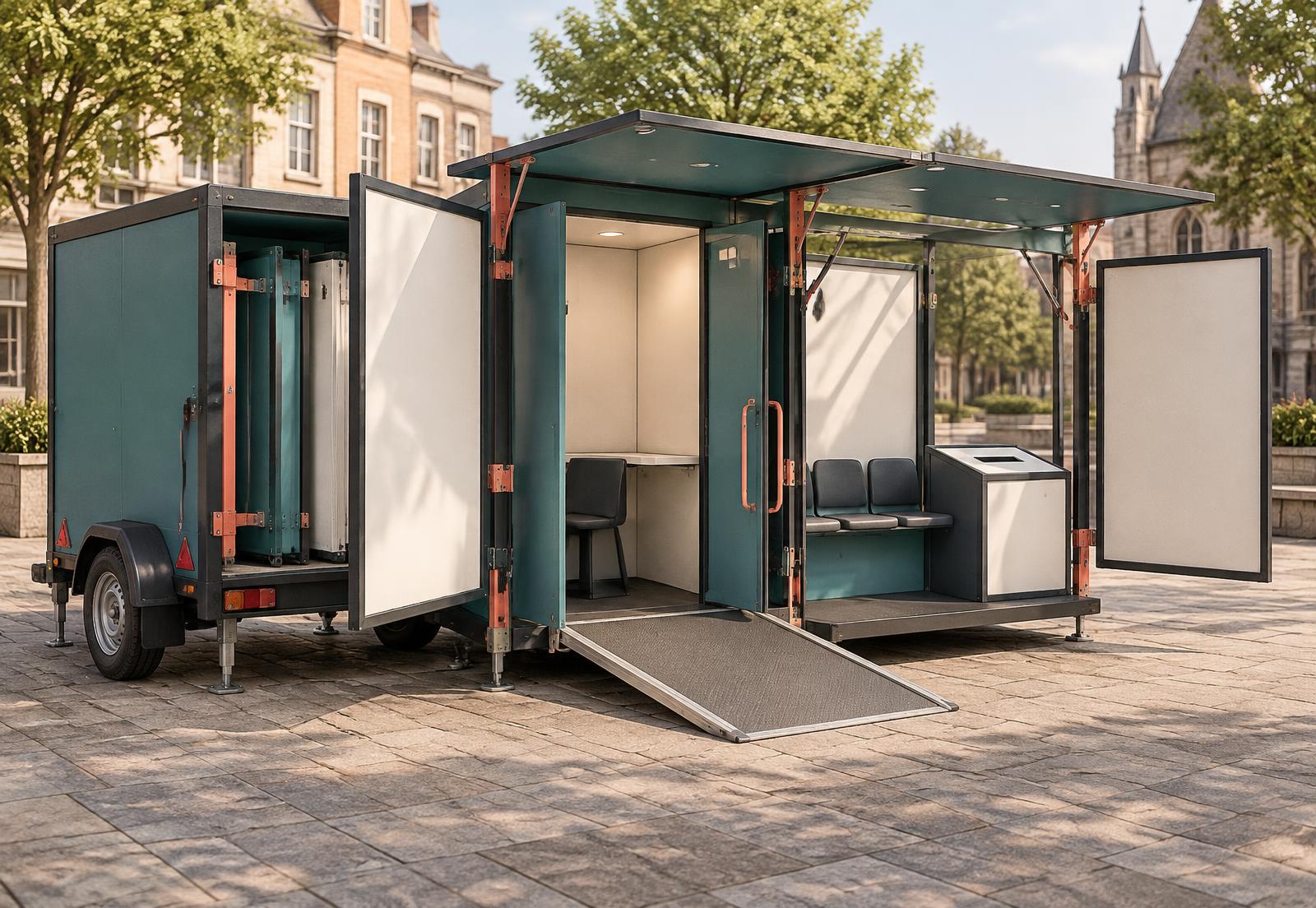
U R GOV / FIELD PROJECT 001 · COMING SOON
A portable public decision station for people who want more say in what happens where they live.
01 / The idea
Democracy should not only happen in Parliament, council chambers, closed meetings or online comment sections. It should be able to turn up where people are.
The Civic Caravan brings U R GOV out from behind the screen and into neighbourhoods, villages, markets, schools, workplaces, festivals and community spaces.
Designed for people shut out by formal meetings, specialist language, unreliable internet, smartphone-only systems or the suspicion that no one is listening. A place to understand an issue, discuss it, share ideas, participate privately where appropriate and follow what happens next. Not just a portable ballot box. A public decision room.
Understand it. Discuss it. Vote on it. Track what happens next.
02 / The station
An issue in plain language: cost, trade-offs, evidence and sources.
Explore decisionsA collapsible privacy booth and paper-backed process for suitable community votes.
A clear record of views, never mistaken for a representative or official result.
See the existing preview signalSpace for problems, proposals and questions decision-makers may be missing.
Who represents the area, what authority they hold and how to reach them.
Meet representativesSourced context on interests, meetings and lobbying — not an allegation.
Explore a sourced exampleLarge print, plain language, multilingual materials and a route without a phone.
Methods, sources, results, corrections and what decision-makers did next.
Read our methodExisting U R GOV links are digital previews, not Civic Caravan ballots or events.
03 / The process
Every future event would state who can participate, who can decide and whether the outcome carries any authority — before anyone takes part.
Publish a neutral question with its purpose, decision-maker, authority, eligibility and sources.
Show the facts, likely impact, strongest arguments, concerns and genuine uncertainties.
Offer paper where appropriate, accessible ballot marking, ideas and in-person ways to take part. A smartphone must never be the only route.
Publish the method, participant count, result, ballot reconciliation and the responsible body's response.
“The system may know that a person took part. It must not know how they voted.”Proposed design principle, not a claim about an existing ballot system
04 / Accountability
Each future event should leave a visible trail: what was asked, who could take part, how it worked, what people said, who could respond and what happened next.
EXAMPLE QUESTION / COMMUNITY FUND
CITIZEN SIGNAL / EXAMPLE COUNTS
*Fictional figures, body, status and date. This is not an event, public promise or verified result. People could select two projects, so counts do not equal participants.
Future events must say whether they are an official election, binding member vote, participatory-budget decision, formal consultation, advisory citizen signal, open public poll or ideas-gathering session. Each has different rules and authority; no example here is an official process.
05 / Where it fits
A method must fit the question and the authority behind it. These are potential uses, not booked events.
Example: Choose priorities for a neighbourhood fund
The station: Explain costs and options, gather choices
POSSIBLE PROCESS · Participatory budget, if rules give it authority
Example: Identify repairs or tenant priorities
The station: Bring a brief and private feedback to residents
POSSIBLE PROCESS · Formal consultation or advisory signal
Example: Compare safer crossings or greener spaces
The station: Put plans, trade-offs and ideas in one place
POSSIBLE PROCESS · Consultation or ideas gathering
Example: Discuss a bus-route change
The station: Make routes, impacts and alternatives understandable
POSSIBLE PROCESS · Consultation or advisory signal
Example: Ask which activities deserve support
The station: Make an age-appropriate, accessible process
POSSIBLE PROCESS · Ideas gathering or budget process with safeguards
Example: Consider a proposal under group rules
The station: Offer a private paper route and a documented count
POSSIBLE PROCESS · Binding member vote only if valid rules permit
Example: Shape a community programme
The station: Collect suggestions and rank options in public
POSSIBLE PROCESS · Open poll or ideas gathering
Example: Identify urgent shared priorities
The station: Hear people with limited digital access
POSSIBLE PROCESS · Advisory signal or consultation
Example: Discuss how a national law affects local life
The station: Connect a public brief to lived concerns
POSSIBLE PROCESS · Explanation and advisory signal, not legislation
Any real process would depend on the organiser's published rules, eligibility, legal authority and independent review.
06 / Trust
These are principles to design and test, not a claim of approval or proven security. For meaningful ballot processes, paper would be the primary human-readable audit record.
Before any official-election use, the relevant legal approvals, standards, accessibility requirements, security reviews and independent oversight would be essential. Learn about U R GOV's method
07 / Access
The Civic Caravan would be designed with people of different languages, bodies, confidence levels, devices and access needs. Physical arrangements still need real testing at each location.
08 / Roadmap
A direction of travel, not a list of finished commitments. No pilots or locations are confirmed.
Set public principles, accessibility approach, neutral question-writing, privacy policy and a prospective pilot network.
Prototype a fold-flat booth, paper box, issue boards, access kit, custody forms and result template.
Propose three distinct pilots: an open citizen signal, a verified community vote and a member vote. Publish what worked and failed.
Explore event briefs, citizen signals, You Said / They Did updates, source records and public audit summaries.
Develop neutral facilitation, accessibility, ballot privacy, custody, counting and reporting training.
Make reusable, affordable public-participation infrastructure communities could adapt.
09 / Get involved
We are looking for people and organisations who believe public power should be visible, understandable and shared. These are invitations to shape a future project, not announcements of partners or confirmed pilots.
WHO COULD HELP
Preview form / not accepting registrations
U R GOV / THE CIVIC CARAVAN
It is a prototype for a more visible, practical and accountable democracy — one that can meet people where they are, explain what is at stake, protect private choice and show what happens after the public speaks.
Understand it. Discuss it. Vote on it. Track what happens next.
U R GOV: The Civic Caravan — Coming Soon
Back to U R GOV